The fabrication industry has always evolved alongside technology, engineering, and manufacturing demands — but the pace of change today is faster than ever. Businesses are looking for smarter, safer, and more efficient ways to build, repair, and innovate. As a result, fabrication is no longer just about cutting, welding, and assembly. It’s about integrating digital tools, sustainability practices, automation, and precision engineering to create better outcomes for customers.
Whether you’re in construction, industrial manufacturing, transportation, energy, or custom-built solutions, understanding where fabrication is headed can help you make smarter decisions about partners, investments, and projects.
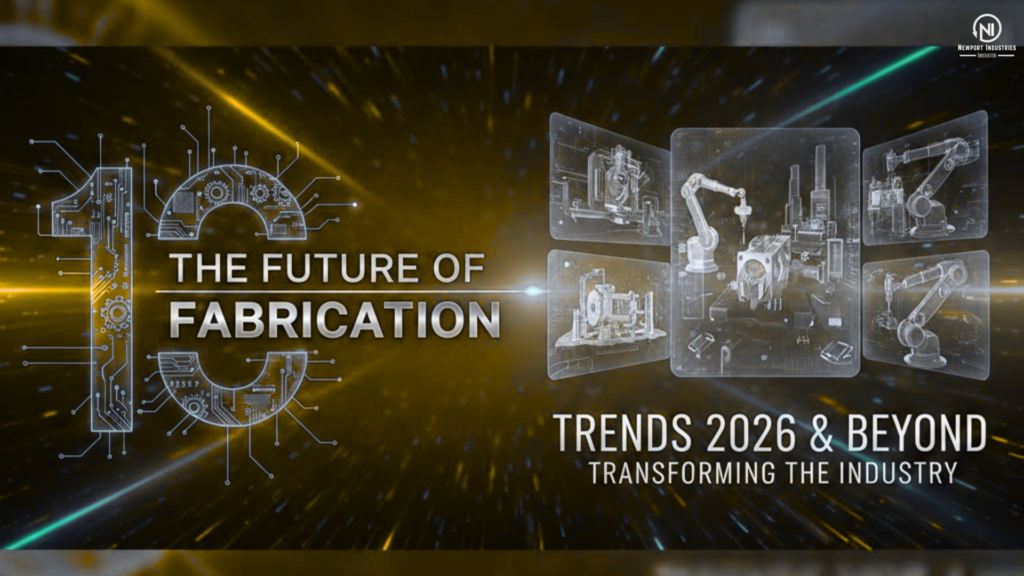
Here are the top trends reshaping fabrication in 2026 and beyond — and why they matter to your business.
1. Automation Is Moving From “Nice to Have” to Standard Practice
Automation in fabrication is not new, but what is new is accessibility. Advanced robotics and CNC machinery used to be limited to large plants. Today, even mid-sized fabricators are integrating automated cutting, bending, welding, and inspection systems.
Automation isn’t about replacing people — it’s about improving safety, accuracy, and repeatability. Machines handle repetitive or hazardous work, while skilled technicians focus on quality control, programming, and problem-solving.
What it means for customers:
Shorter lead times, consistent quality, fewer production errors, and better pricing stability.
2. AI-Assisted Design and Engineering
Artificial intelligence is finding its way into fabrication through smarter design tools and simulation software. Instead of relying solely on trial-and-error prototypes, engineers can now model stress points, material performance, and structural behavior digitally before the first cut is made.
AI-driven design helps teams:
- optimize material usage
- predict structural performance
- speed up approval and iteration cycles
- reduce costly rework
As demand for customization grows, AI becomes a strategic advantage — ensuring projects are both efficient and reliable.
Bottom line: Faster design approvals, fewer mistakes, and stronger, more durable builds.
3. Digital Twins and Virtual Prototyping
A “digital twin” is a virtual version of a physical project. Fabricators are increasingly using digital twins to plan complex builds, visualize assembly steps, and coordinate installation.
Instead of discovering issues on-site, problems are identified early in the virtual environment. This dramatically reduces delays and avoids mid-project redesigns.
Benefits include:
- clearer communication between teams and clients
- improved planning accuracy
- better lifecycle management of equipment and structures
As industries demand transparency and predictability, digital twins will continue to grow as a fabrication standard.
4. Smarter Material Selection and Advanced Alloys
Traditional materials like carbon steel, stainless, and aluminum will always play a major role — but fabrication is seeing new interest in engineered materials and specialty alloys.
These materials offer:
- higher strength-to-weight ratios
- improved corrosion resistance
- extended service life in extreme environments
More clients are asking not only, “Will it work?” but also, “How long will it last, and how can we reduce maintenance?”
Fabricators who understand performance-based material selection can help customers design smarter, longer-lasting solutions instead of short-term fixes.
5. Sustainability and Waste Reduction
Sustainability has moved from buzzword to business strategy.
Fabricators are reducing scrap, reusing offcuts, and improving energy efficiency through lean processes and smart layout planning. Many customers now ask about environmental impact — particularly in construction, energy, and municipal projects.
Sustainable fabrication focuses on:
- precise cutting to minimize waste
- recycling leftover materials
- energy-efficient equipment
- durable designs that reduce replacement cycles
Companies that prioritize sustainability not only help the environment — they also reduce costs and improve project value.
6. Custom Fabrication as a Competitive Advantage
Mass-produced parts work — until they don’t.
More industries are discovering the value of custom fabrication tailored to their exact needs. Whether it’s improving workflow, solving space constraints, or replacing obsolete machine components, custom fabrication bridges gaps standard solutions can’t.
Custom work supports:
- retrofitting older equipment
- improving safety setups
- optimizing production layouts
- solving unique operational challenges
Instead of forcing operations to adapt to equipment, fabrication allows equipment to adapt to operations — and that shift is powerful.
7. Modular and Prefabricated Structures
In construction and industrial environments, modular fabrication is accelerating timelines and reducing on-site risk. Components are built in controlled shop environments, fully tested, and then transported for final installation.
This approach improves:
- quality control
- weather-proof scheduling
- worker safety
- installation speed
Prefabrication also reduces disruption at active sites, helping businesses stay operational while upgrades take place.
8. Enhanced Quality Control With Smart Sensors
Quality control is becoming proactive instead of reactive.
New fabrication tools integrate sensors and digital inspection systems that measure tolerances in real time. Instead of identifying quality issues after production, teams detect inconsistencies immediately — adjusting processes on the spot.
That translates to:
- fewer rejected parts
- tighter tolerances
- more reliable assemblies
Clients benefit from higher confidence and reduced downtime.
9. Workforce Upskilling and Multi-Disciplinary Teams
As technology evolves, the fabrication workforce is evolving too. Modern technicians are part fabricator, part technician, part problem-solver.
Training now includes:
- programming automated systems
- reading 3D digital models
- collaborating closely with engineers and designers
Fabrication is becoming more collaborative than ever, blending craftsmanship with technology. Companies that invest in their teams deliver higher value, better communication, and smarter solutions for customers.
10. Faster Turnarounds Through Integrated Project Management
Clients want speed — but not at the cost of quality.
Forward-thinking fabrication shops are integrating design, engineering, cutting, machining, welding, finishing, and logistics under one coordinated project flow. This reduces bottlenecks and miscommunication between separate vendors.
When all phases talk to each other, projects move smoothly — and customers experience fewer surprises.
What These Trends Mean for Businesses
These trends all share a common theme: fabrication is becoming smarter, safer, and more strategic.
Businesses that partner with modern fabricators benefit from:
- improved quality and durability
- predictable delivery schedules
- smarter cost control
- safer operations
- long-term reliability instead of short-term fixes
As technology continues to advance, the gap between traditional fabrication and forward-thinking fabrication will only widen. The companies that embrace innovation will be the ones prepared for growth, efficiency, and long-term success.